
For home
EDUstick® SOLO
Imagination you can pick up
Your child lifts the pen off the page and draws into the air. The warm line sets in seconds, and the idea that existed only in their head a minute ago is now standing on the table, solid enough to hold. No screen, no app, no waiting on a printer.
- EN 71 certified
- Parental lock
- Dispatch within 24 h
- 24-month warranty
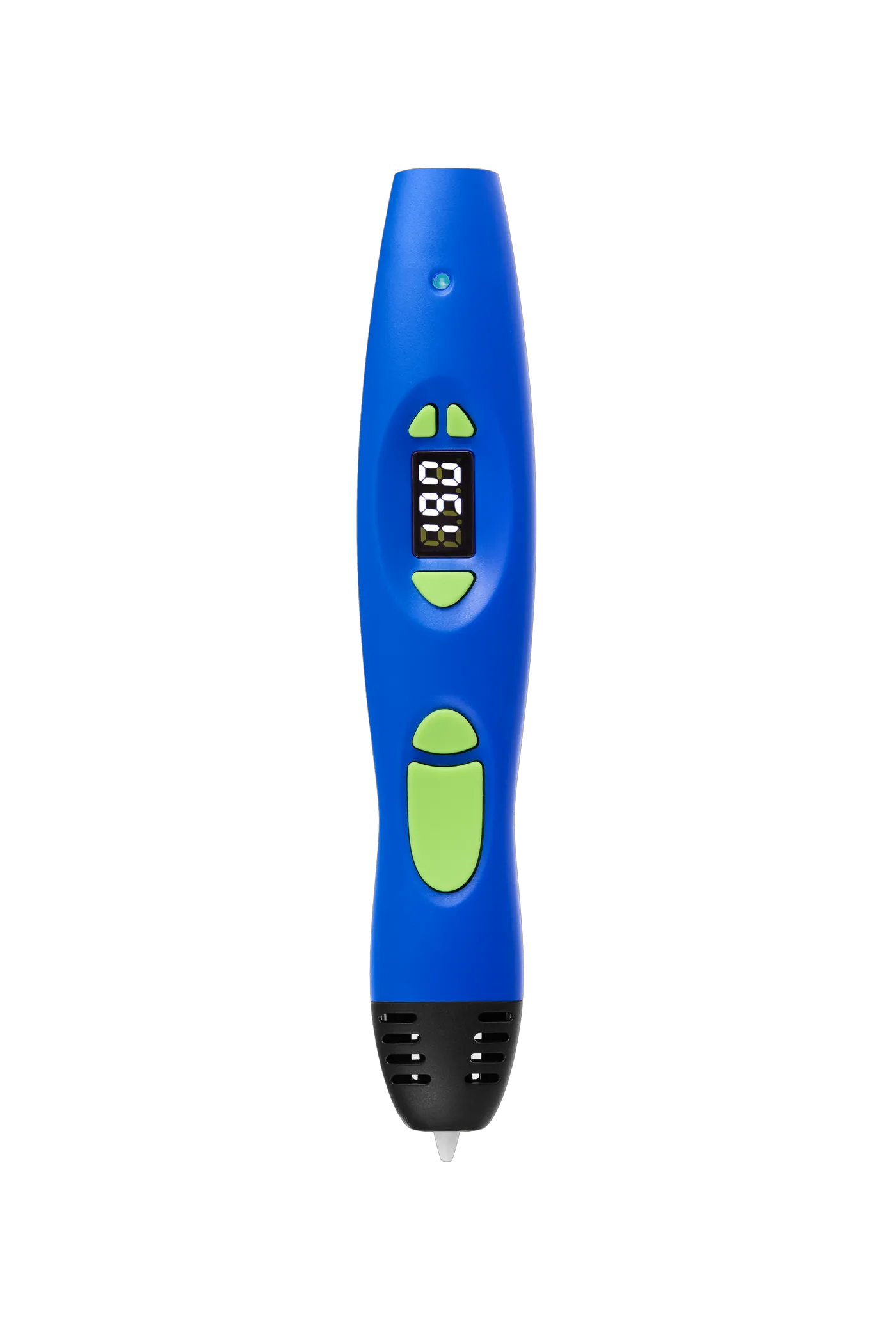
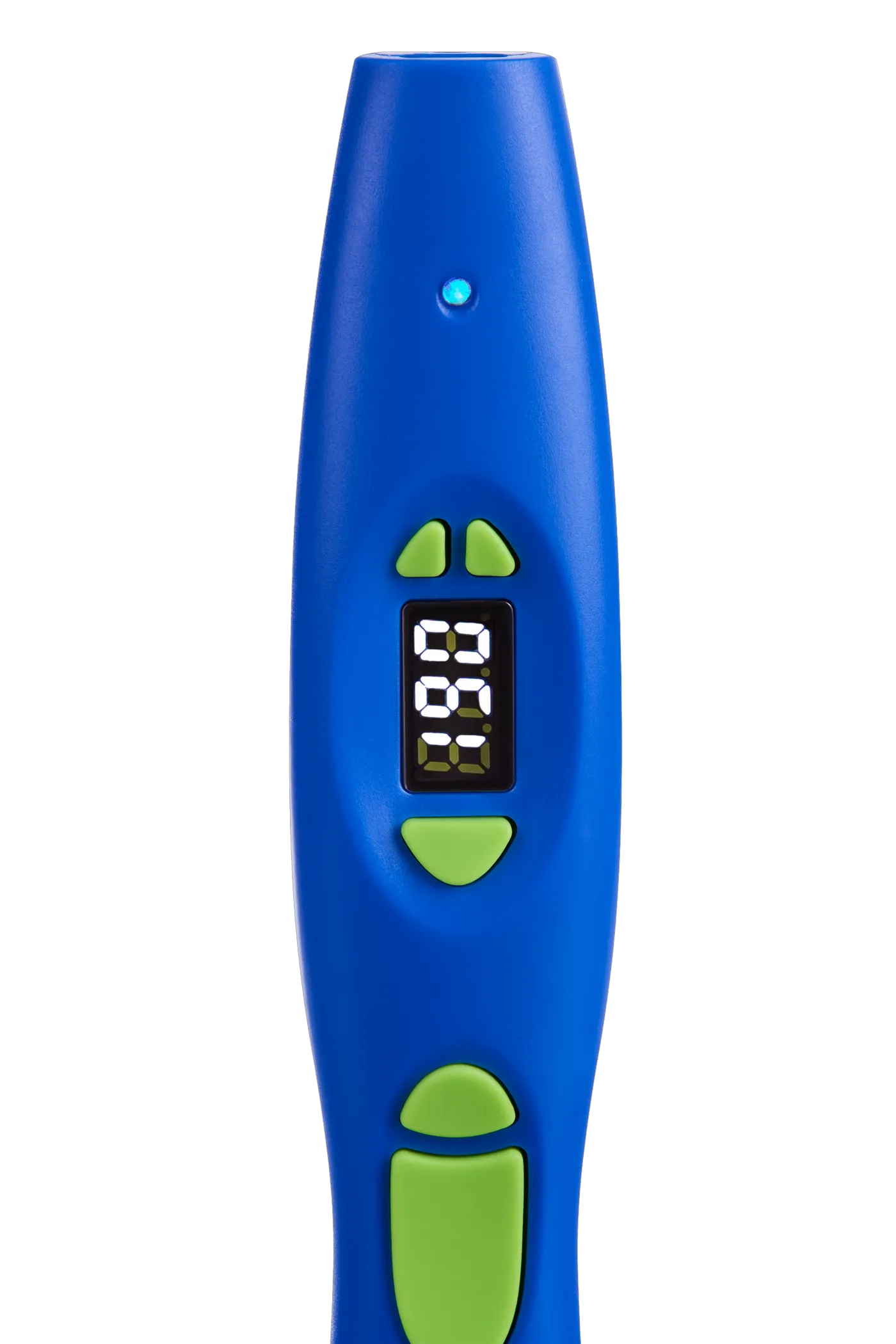
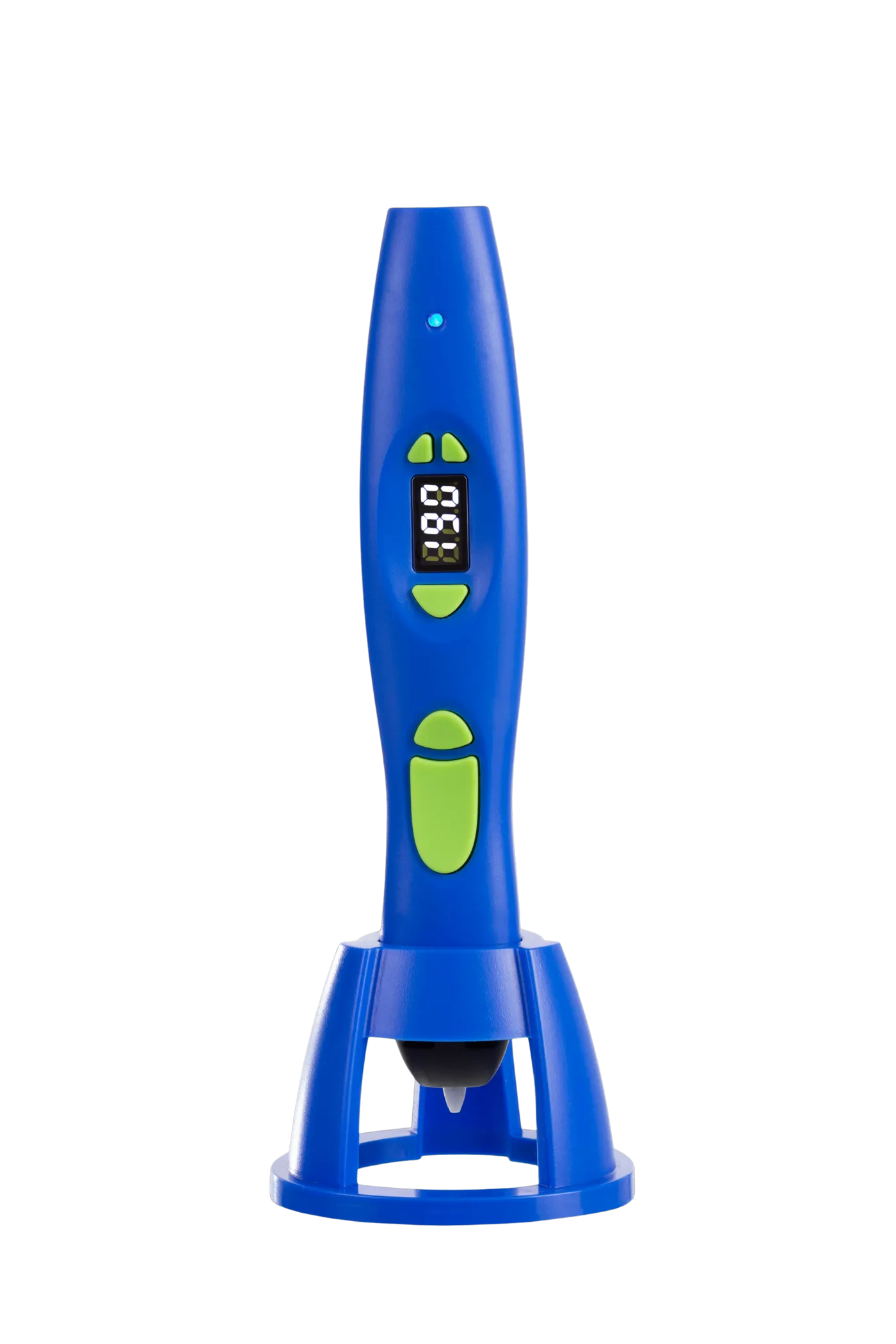
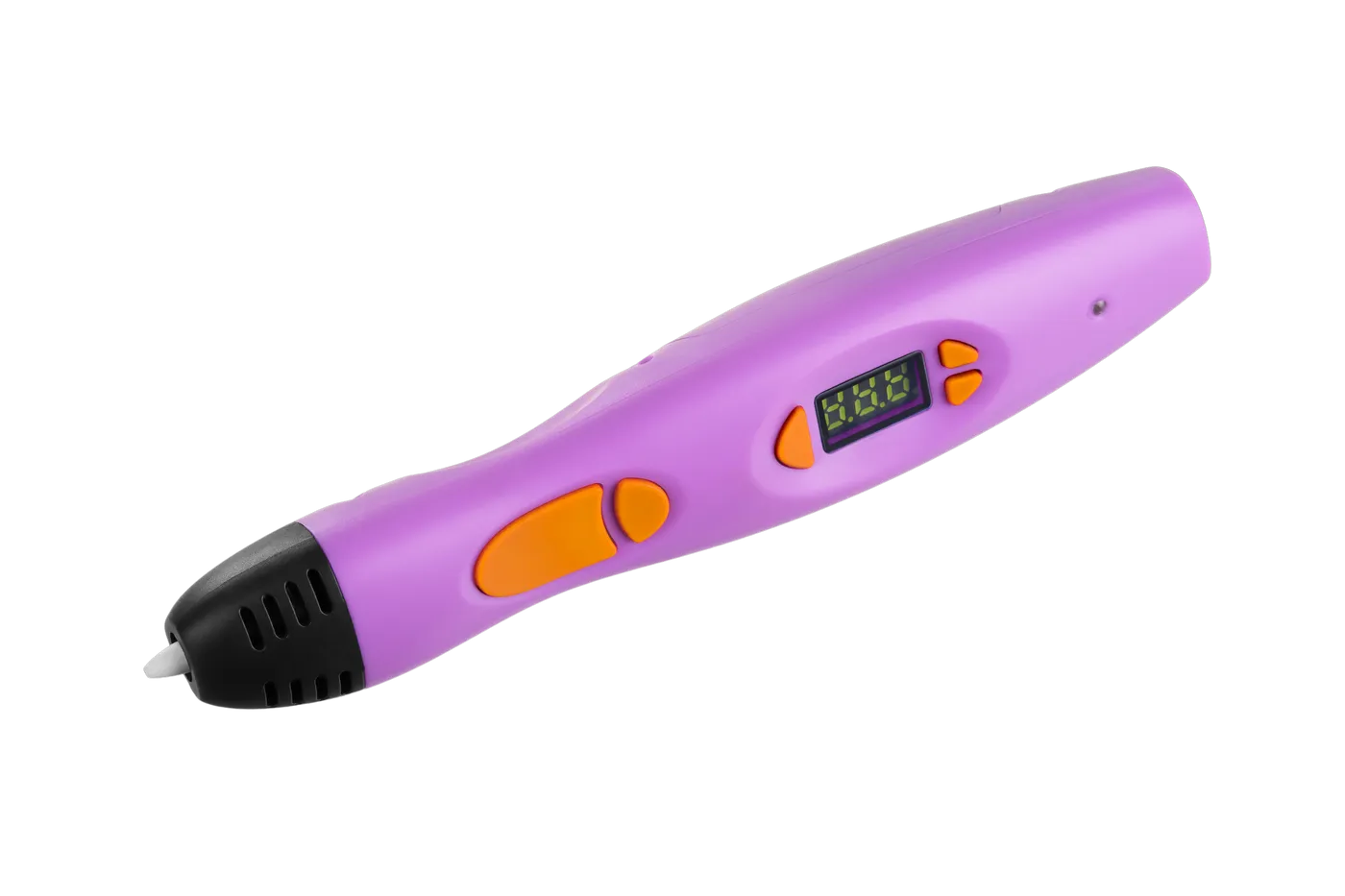
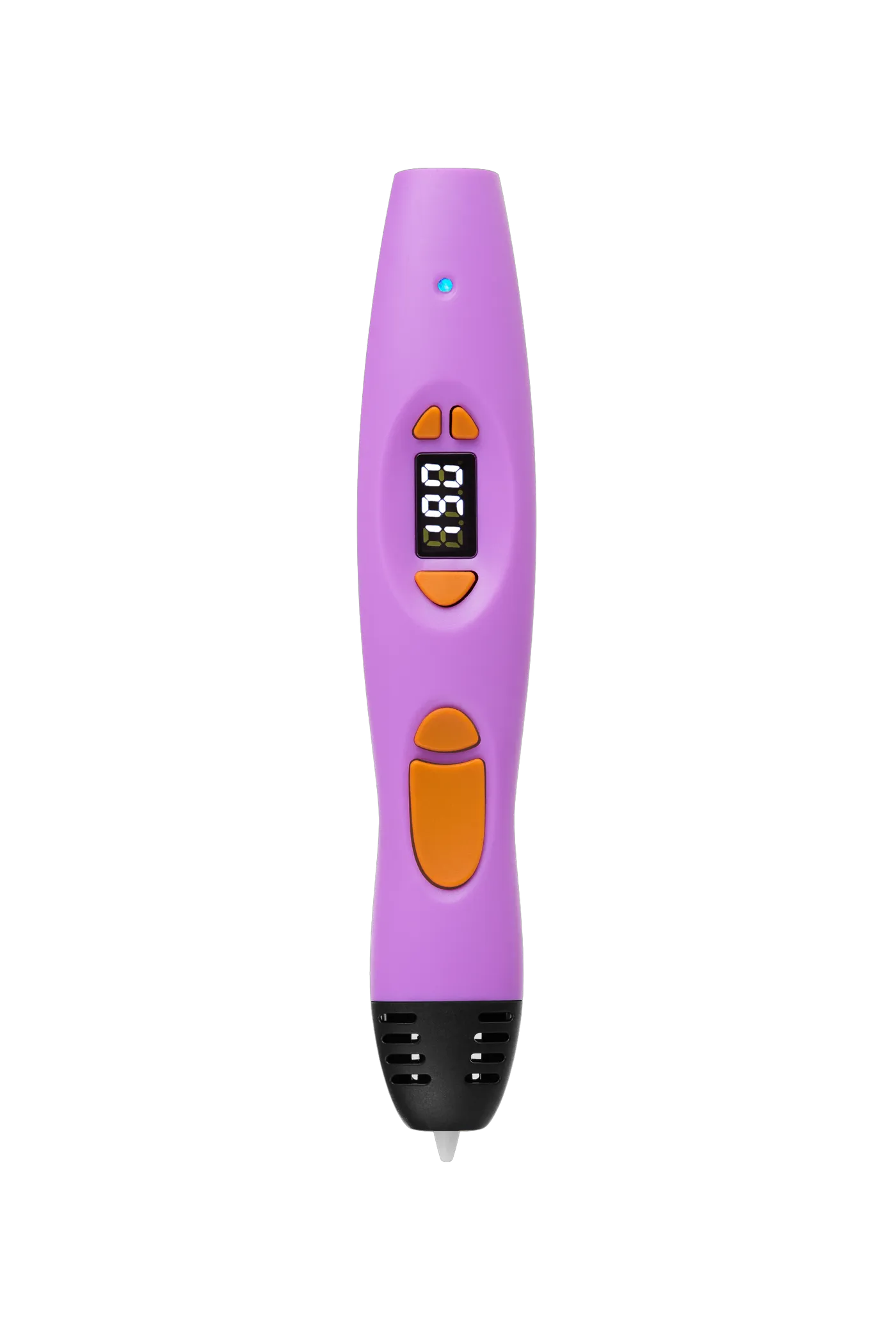
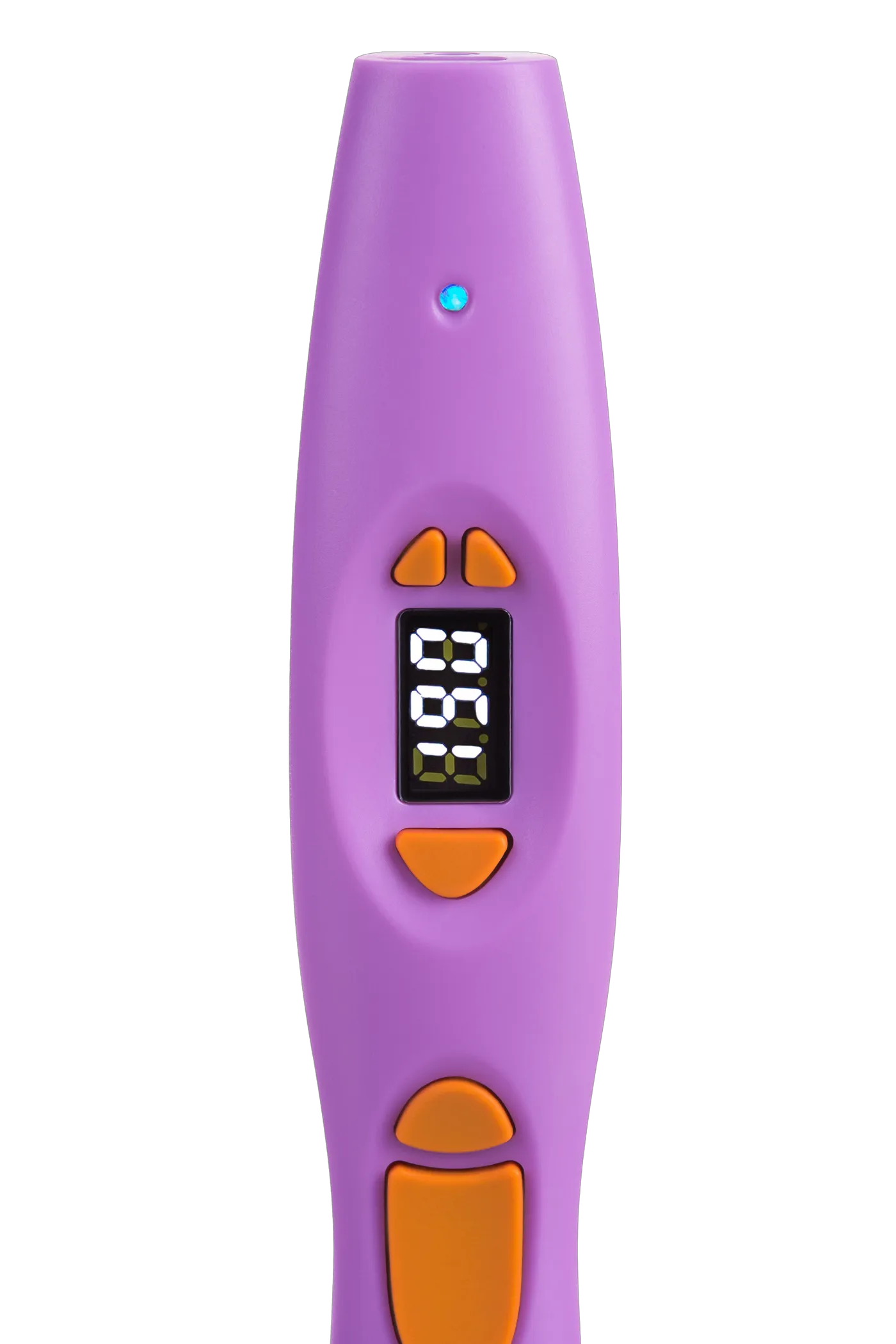
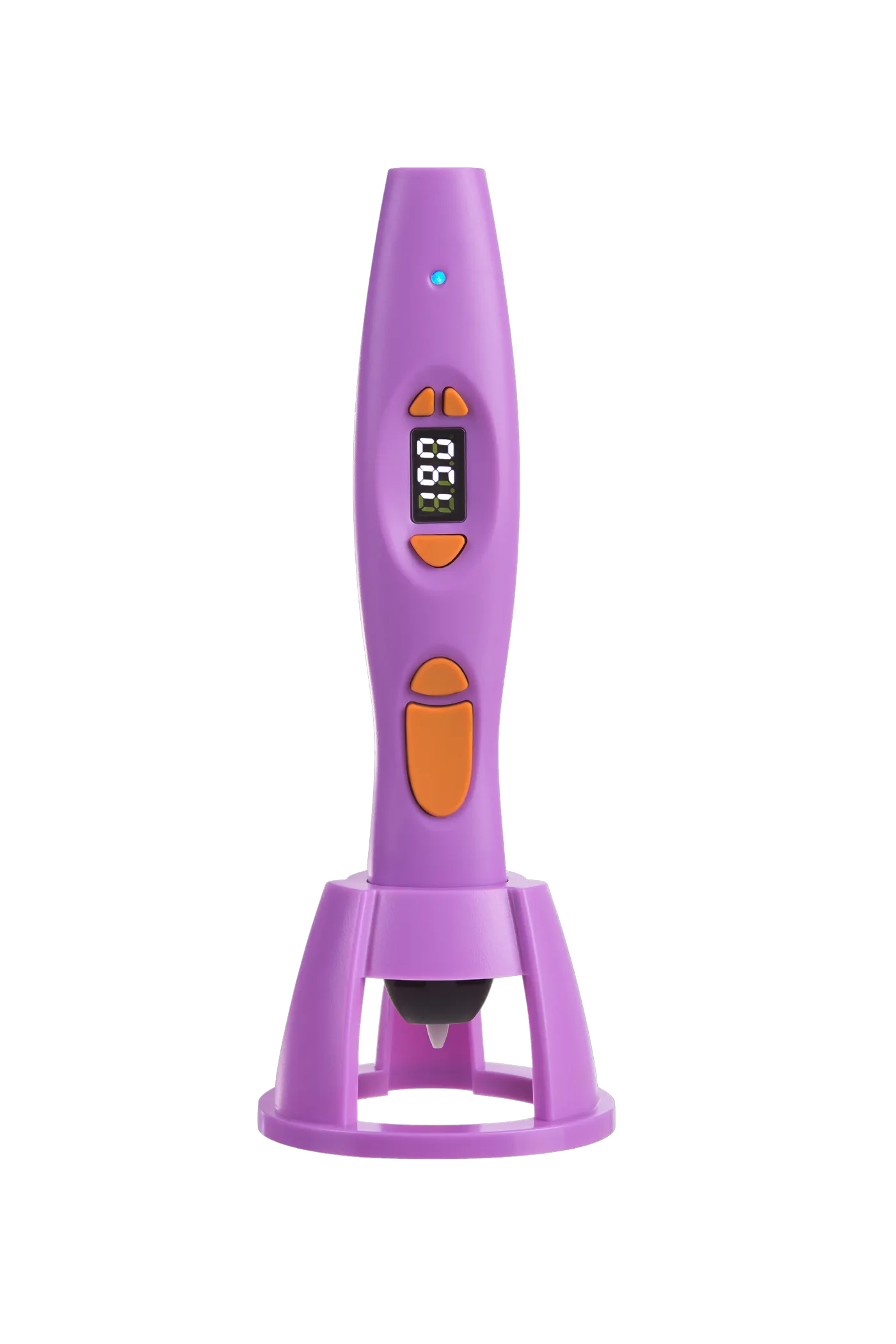
- Adjustable in 5°C steps, five materials
- 50-230 °C Adjustable in 5°C steps, five materials
- Temperature ceiling with the parental lock
- 90 °C Temperature ceiling with the parental lock
- Auto-sleep once the pen is put down
- 5 min Auto-sleep once the pen is put down
- Warranty and support from the EU
- 24 months Warranty and support from the EU
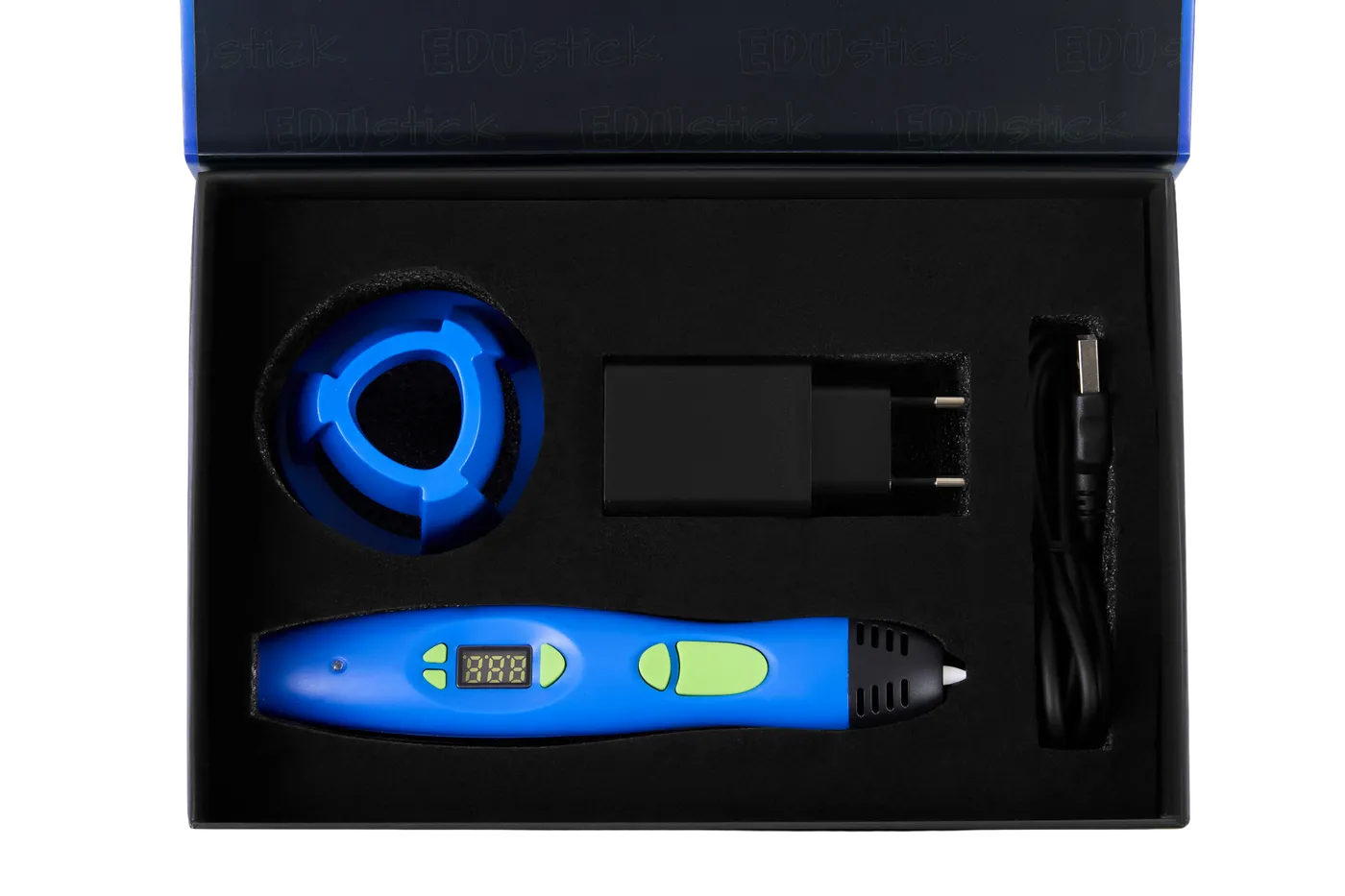
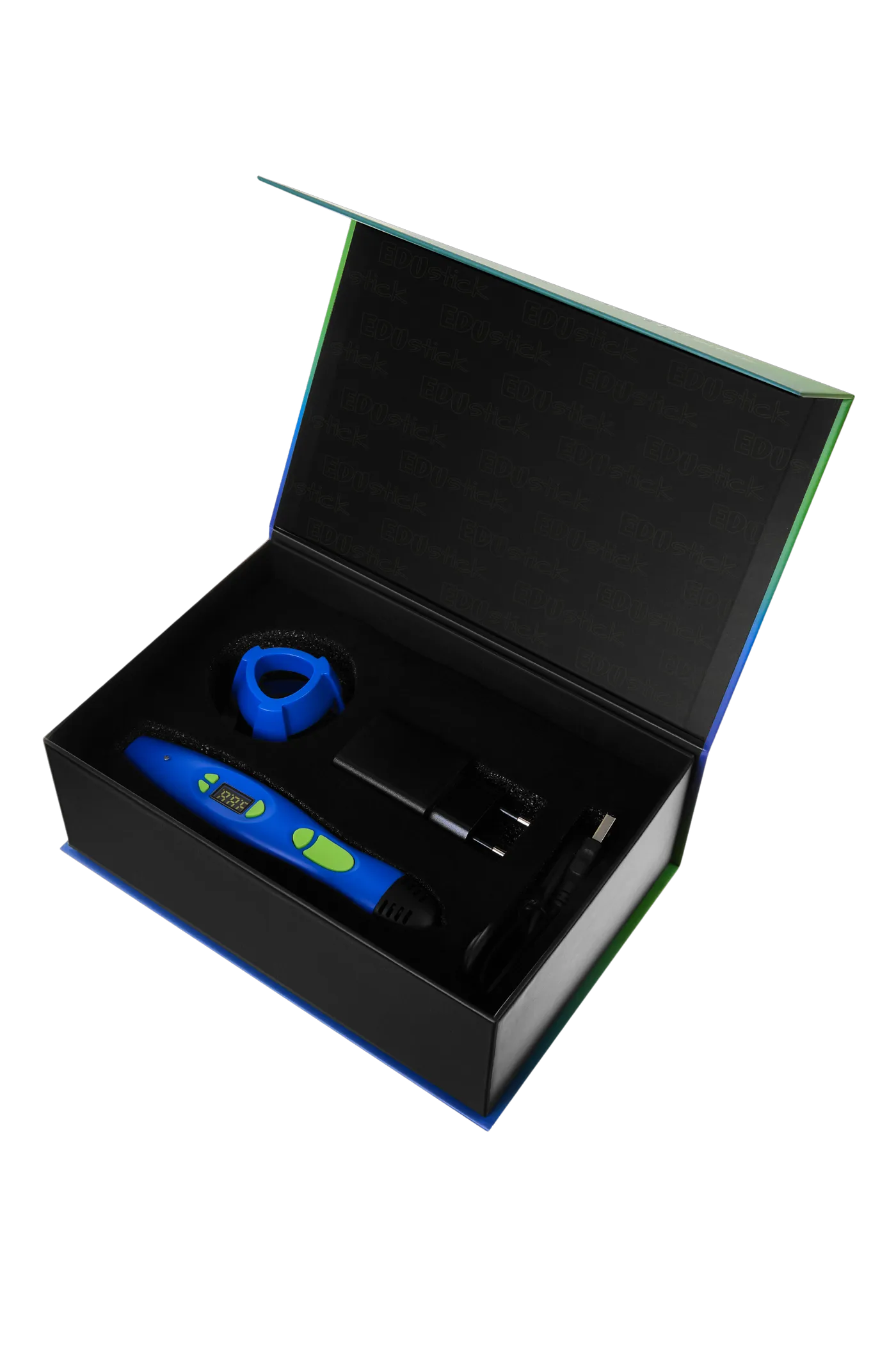
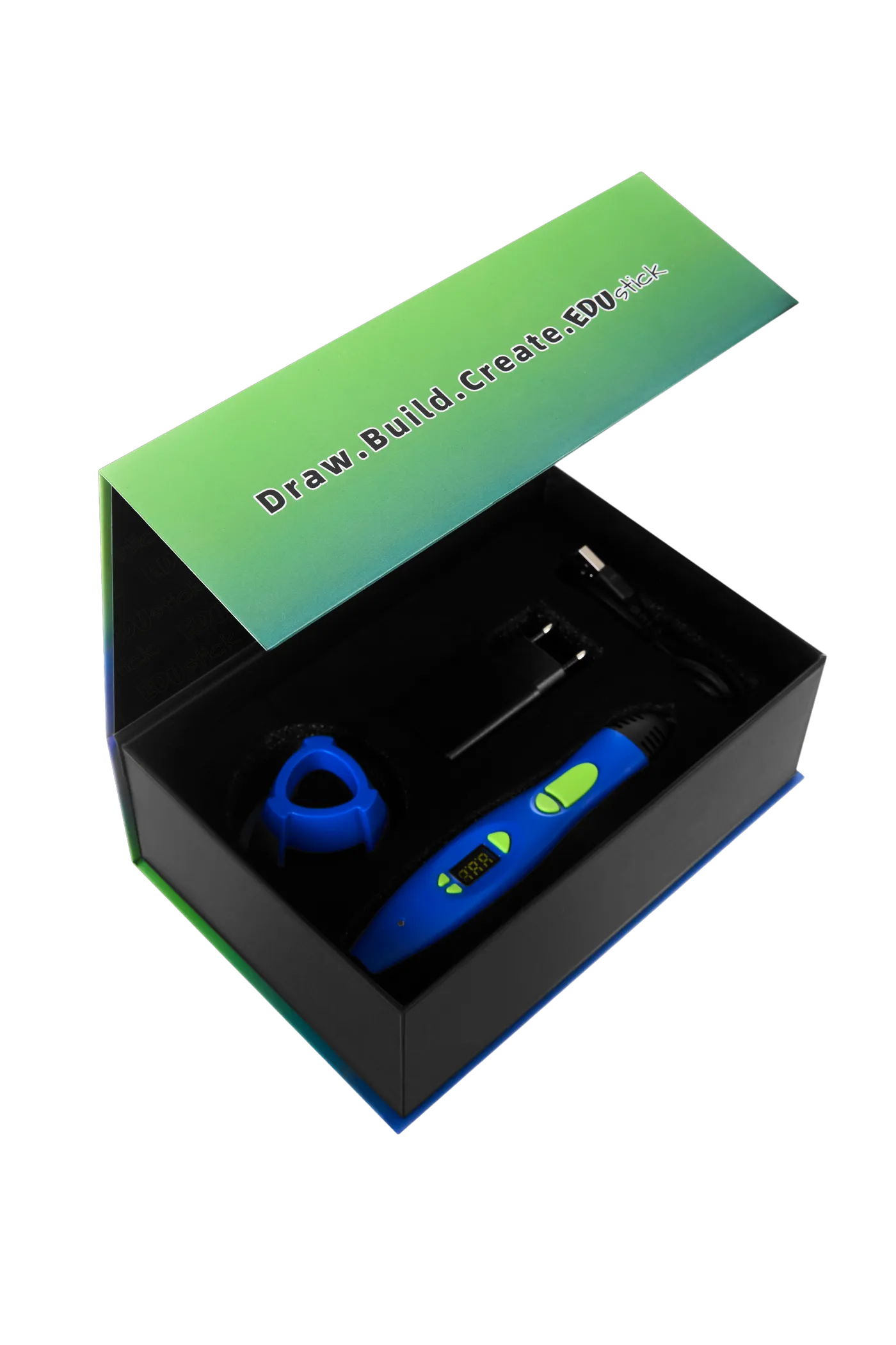
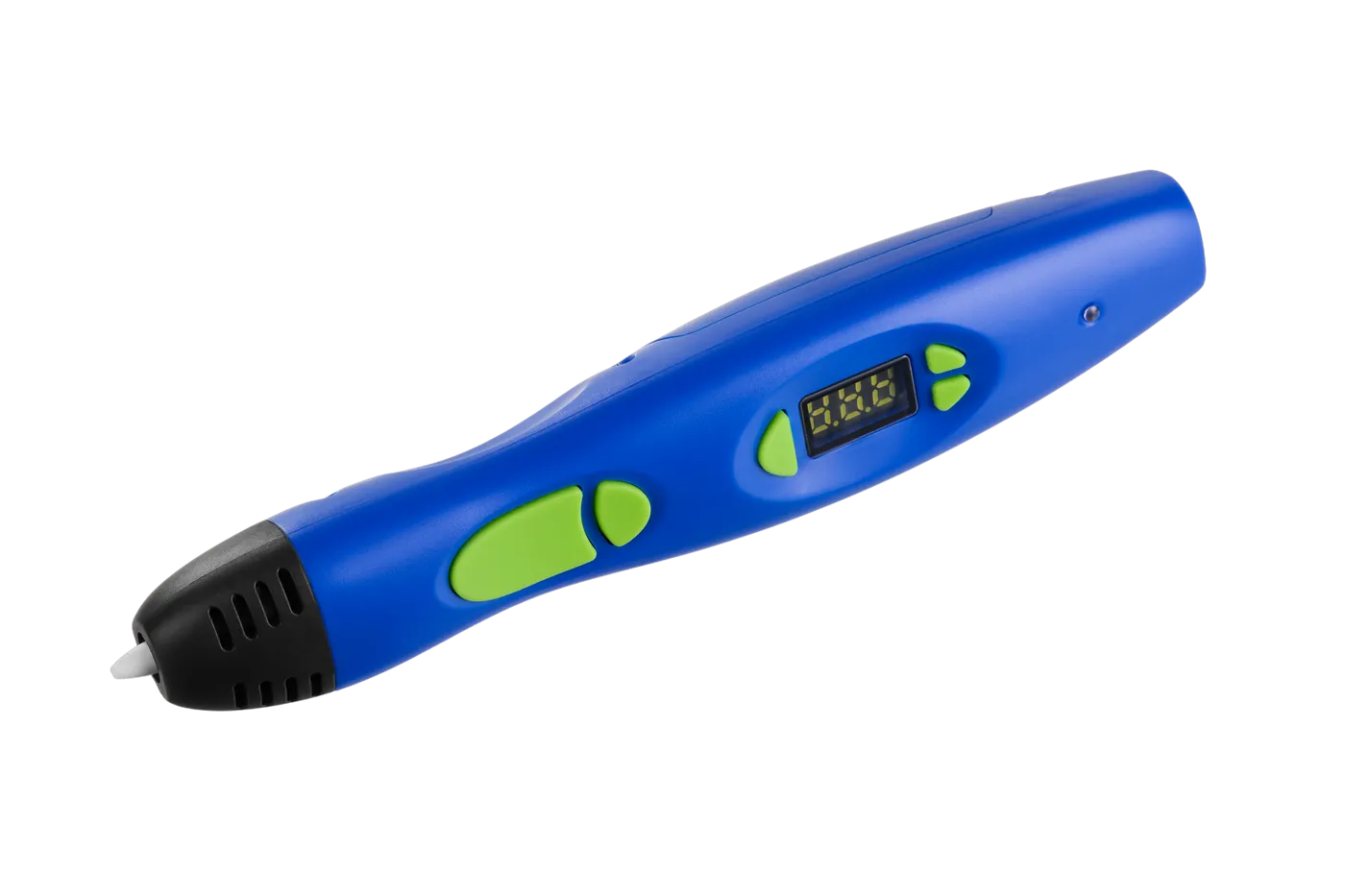
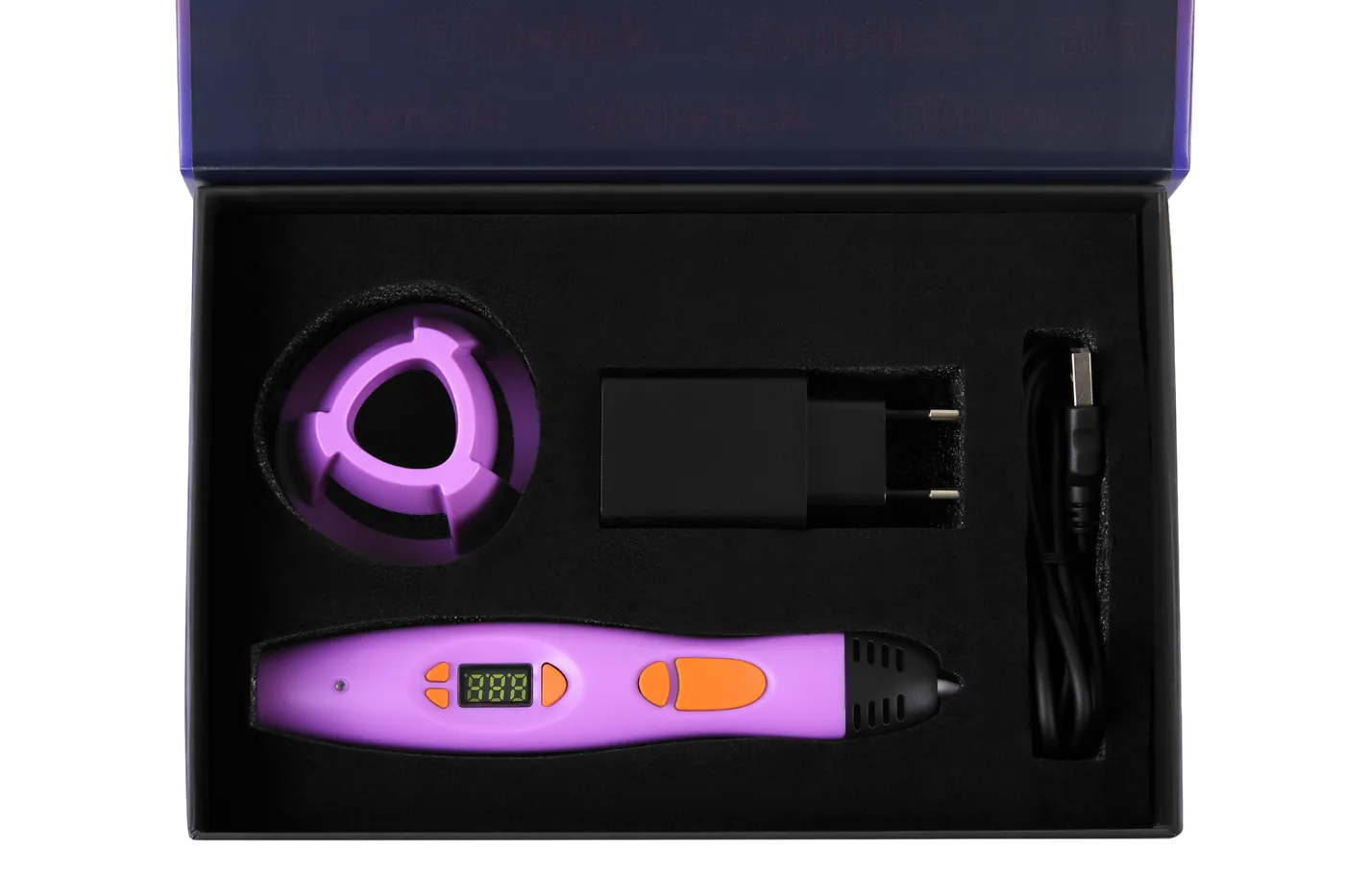
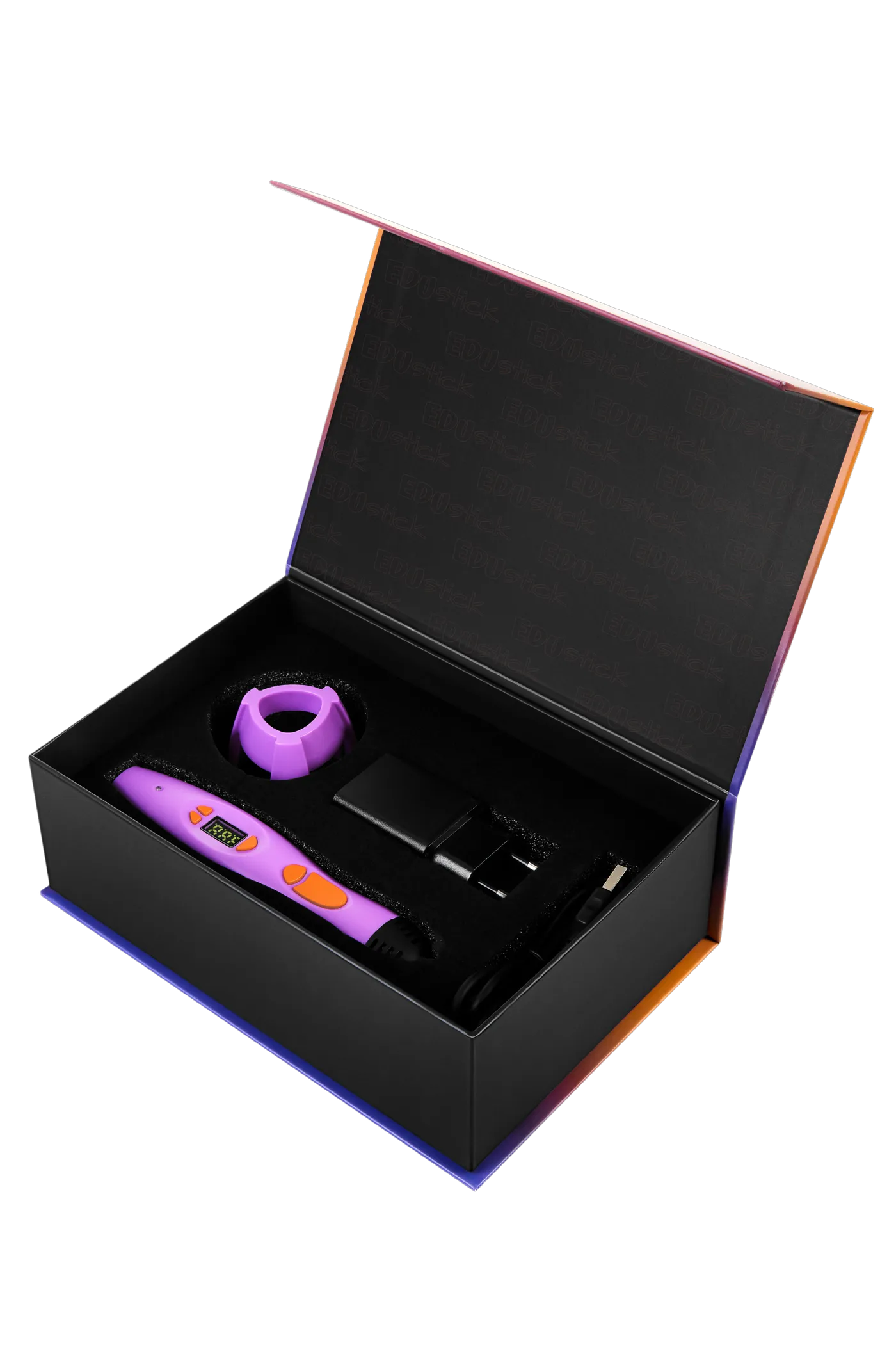
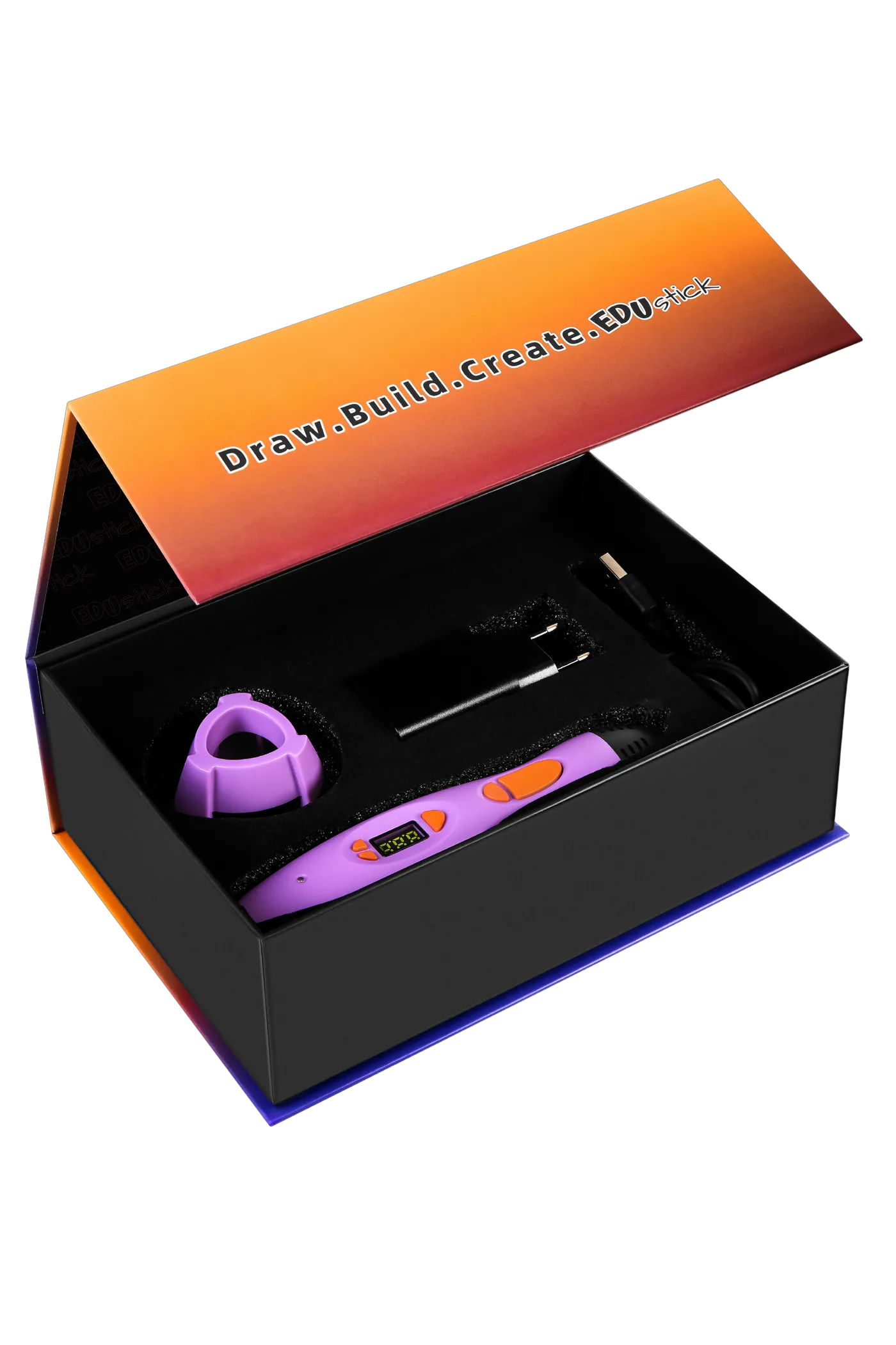
This is a set of two separate, interchangeable products: a 3D pen and an external drive unit. The set price includes both, configured and ready to use. Each is also available separately as a standalone product.
How it works in practice
From idea to object in three moves
-
Load the filament
A strand goes in from the top and the pen sets its own baseline parameters for the material. No configuring, no manual on your knees.
-
Draw
Flat over a stencil, or straight into the air. The warm line sets within seconds, so the shape holds itself right away.
-
Pick it up
Lines become an object: a figurine, a keychain, a model for a lesson. Something a child can take to school and show.

Starter pack
You do not start from a blank sheet
The pen comes with 30 ready-made activities. Pick a theme, print the worksheet and sit down at the table.
Free, once you create an account.
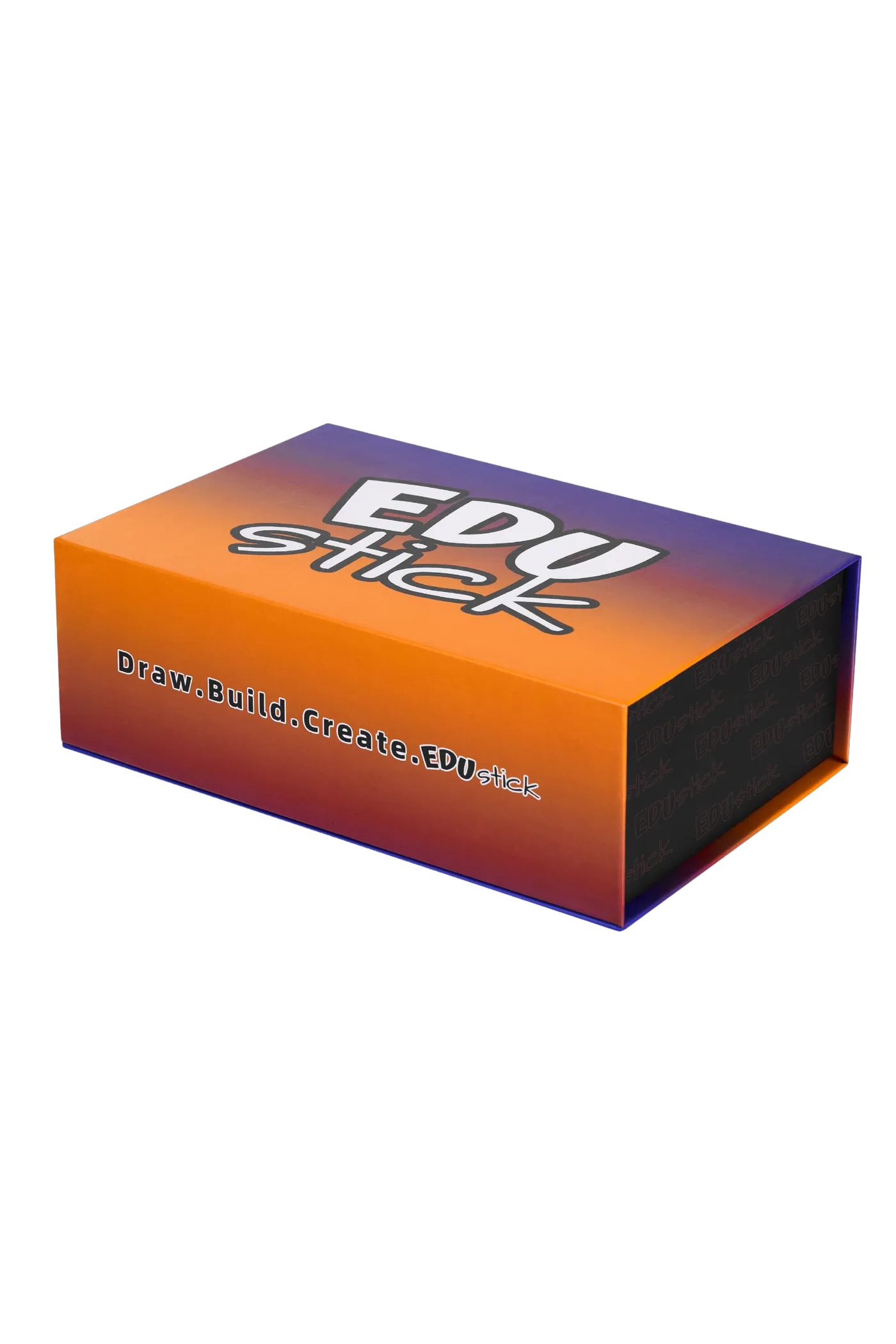
See both colourways and what ships in the box
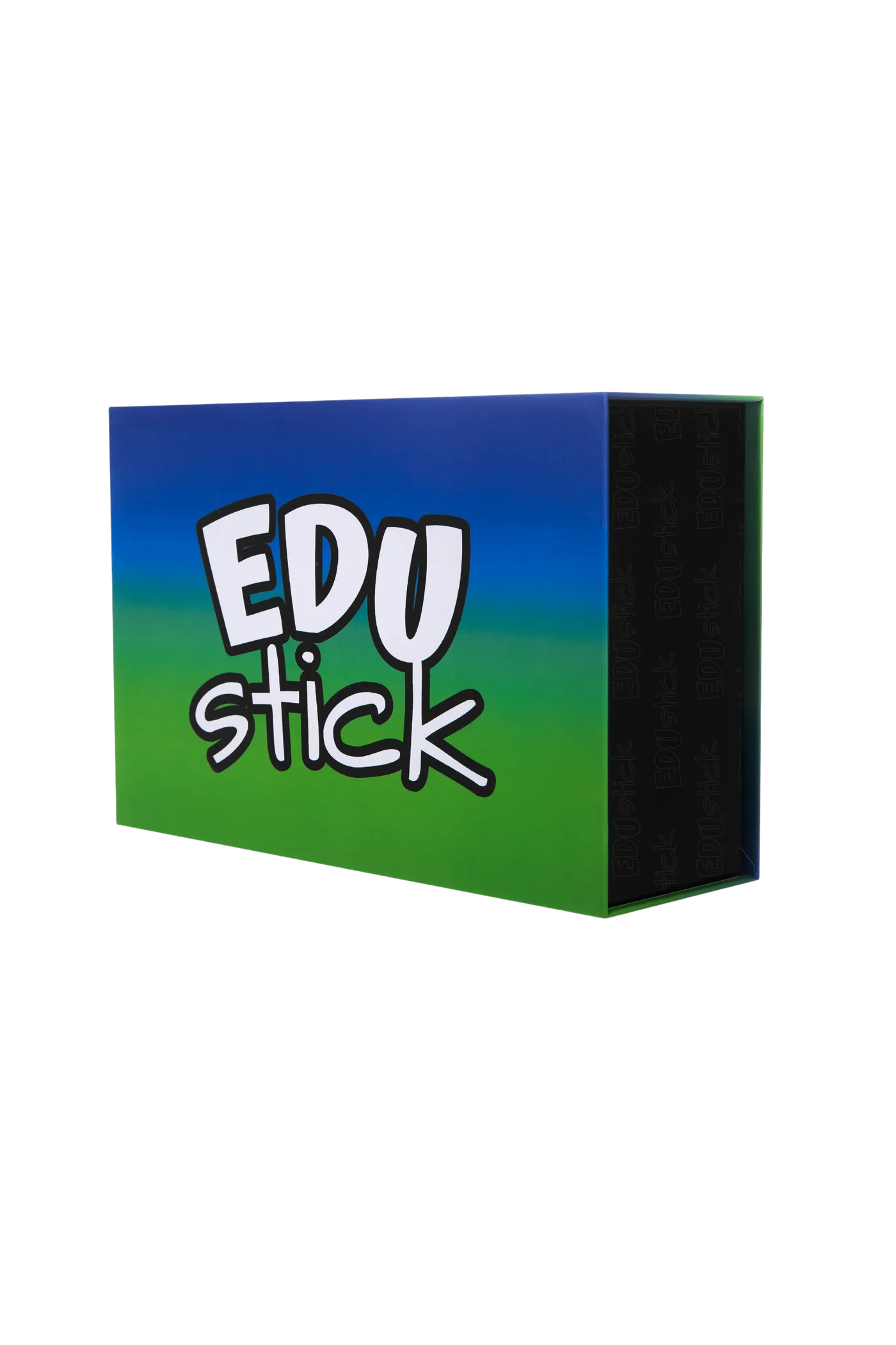
Blue and purple, the full kit contents and the current price are waiting in the shop.
- 430+ schools work with EDUstick®
- Dispatch within 24 h on business days
Key benefits
Draw in three dimensions
Turn imagination into physical objects, drawing in the air or on flat surfaces.
Certified for children
EN 71 toy safety, CE, RoHS, REACH. 24-month warranty.
Adjustable 50-230°C
Supports PLA, PCL, ABS, TPU and PET-G filaments, versatile from day one.
Parental lock and auto-sleep
The lock limits heating to 90°C, auto-sleep after 5 idle minutes.
What gets made in the first weekend
A keychain, then a figurine, then a shelf of their own models
The first project is usually a flat shape traced from a stencil, finished in about fifteen minutes. Two afternoons later they are building in the air, and by the end of the week they arrive with an idea that was not in the instructions.
- A name keychain. A first win in 15 minutes, clipped to the school bag the same day.
- Figurines and small animals. They stand on their own, because set filament holds its shape. Half an hour of work, a whole evening of play.
- A model for a lesson. A geometry net, a plant cell, a bridge for design class. Homework the other kids ask to look at.
- Jewellery and decorations. Bracelets, pendants, letters, ornaments. Filament costs pennies and the ideas keep coming.
- Repairs instead of the bin. A rebuilt clip, a new peg, a mended toy. Children discover that broken things can be saved.
- Costume props. Details for a costume, cosplay parts, a crown for the school play.
Peace of mind
The heat stays where it belongs: at the nozzle
A 3D pen melts plastic, so every parent asks the same question first: how hot does it get, and is that safe near small hands. The answer is not "please be careful". The answer is how the pen is built.
Switch the parental lock on and the pen will not let a child go past 90°C, however hard they try. Left untouched, it powers down after five minutes. The housing stays cool to hold, and the only hot part is the tip a child never touches while drawing.
On top of that: EN 71, the same toy-safety standard required for products sold to children in the EU. Most cheap pens from overseas marketplaces carry no certification at all.
- Parental lock. Caps heating at 90°C. The full range up to 230°C stays available for older, experienced users.
- Auto-sleep after 5 minutes. A pen put down and forgotten switches itself off instead of heating unattended.
- PCL filament to start. A low-temperature material that flows at around 60°C. A gentler entry point for the youngest makers.
- Drop-tested from 1000 mm. Because the pen will hit the floor. Not "if", but "when".
- Certification with paperwork. EN 71, CE, RoHS, REACH, WEEE, EMC and LVD. Every claim backed by a test report, not a logo on the box.
- A company with a real address. A 24-month warranty and support from Warsaw, Poland. When something breaks, a person answers, not a vanished seller.
What the child takes away
Trains the hand and the head, while feeling like play
A 3D pen is held exactly like a pencil: three fingers, the side of the hand resting on the table. The difference is the motivation. Handwriting drills get done because they have to be; here a child will guide a steady line for half an hour by choice, because there is a dragon at the end of it.
Underneath, fine motor control is doing the work: pacing the stroke, keeping pressure even, correcting with small wrist movements. The same movements practised before learning to write, minus the exercise book and the marking.
Spatial thinking comes with it. To build a cube you first have to picture it and count the faces. A six-year-old traces a star from a stencil, a twelve-year-old designs a working hinge. Same pen, different level of ambition, nothing new to buy in between.
- A proper writing grip. The barrel is the thickness of a pencil and calls for a tripod grip, so the child rehearses the hand position that later goes into the exercise book.
- Fine motor control. Drawing a warm line needs steady pace and light pressure. The hand learns to meter force instead of simply gripping harder.
- Hand-eye coordination. The eye holds the shape, the hand keeps up, and the line forms in mid-air with no paper to steady it. Harder than drawing flat, which is exactly why it works.
- Spatial imagination. An idea has to be broken into parts before it exists: how many faces, what holds what up, where to start. Drawing turns into planning.
Before you buy
Four questions every parent asks
- What age can a child start at?
- From around three in the locked mode, with an adult present at all times. From six with broader settings and supervision, and independently from twelve. Start with full supervision and widen the freedom as the skill grows.
- Will they get bored after a week?
- That risk drops when the difficulty grows with the child. First builds are flat shapes traced from a stencil, then structures in the air, then models for lessons and repairs around the house. Filament refills are cheap, so the next idea does not need another purchase of equipment.
- What if it breaks?
- You have a 24-month warranty and support run from Warsaw. The hardest-working part, the extrusion drive, is a separate product with its own code, so a worn drive means replacing the module rather than the whole pen.
- Where do new ideas come from once the starter stencils run out?
- From the guide. It collects first projects, exercises for grip and precision, ideas sorted by age, and fixes for the usual snags such as a line that keeps breaking or a model that will not stand up. New entries are added regularly. Open the guide
Specification
- Temperature range
- 50-230°C, in 5°C steps
- Speed levels
- 10
- Weight
- 64.7 g
- Power
- USB-C, 5V/2A (10W)
- Parental lock
- limits heating to 90°C
- Auto-sleep
- after 5 idle minutes
- Drop resistance
- 1000 mm
- Certificates
- EN 71, CE, RoHS, REACH, WEEE, EMC, LVD
- Warranty
- 24 months
The first line could happen tonight
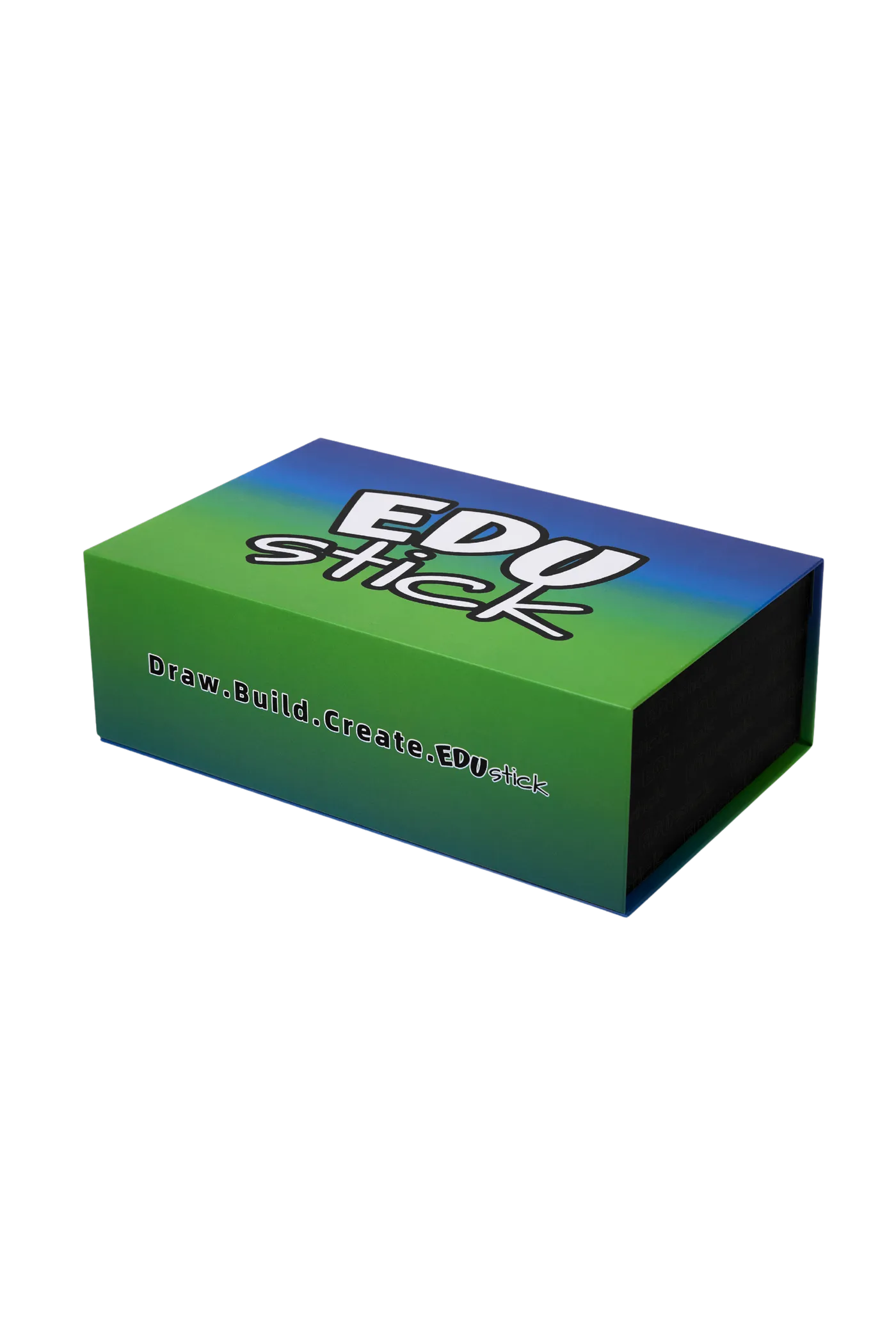
The set works straight out of the box: pen, drive unit, starter filament and a worksheet. Load a strand and let them start.
- Dispatch within 24 h on business days
- Free delivery in Poland from 399 zł
- 24-month warranty